I/O Control of racer 2 L and racer 2 XL Cameras#
The GPIO lines are designed to accept RS-422 differential signals, but they can also be used with low voltage TTL signals. Each GPIO line can be configured to work as an input or as an output.
NOTICE: Applying incorrect electrical signals to the camera's GPIO line can severely damage the camera.
- Before you connect any external circuitry to the GPIO line, use the Line Mode feature to configure the line for input or output.
- Make sure to apply appropriate input or output signal voltages as specified below.
- Make sure the cable and plug you connect to the 12-pin receptacle follows the correct pin assignment. In particular, don't use a pin assignment that would be correct for Basler area scan cameras. The 12-pin receptacles of Basler line scan and area scan cameras are electrically incompatible.
Input Lines#
Using the Input Lines with RS-422#
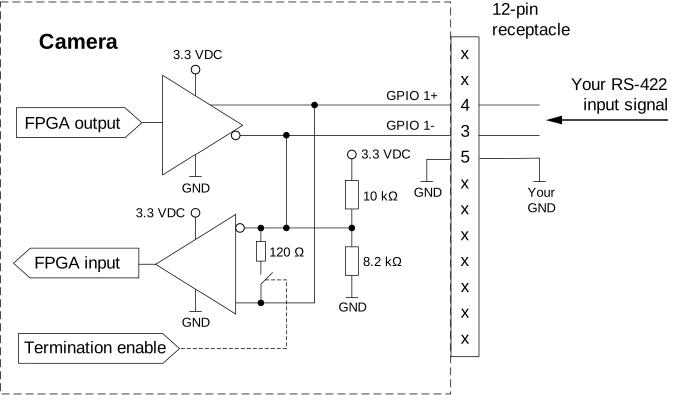
The following diagram shows a typical circuit when each input line is designed to receive an RS-422 signal. For the camera's I/O circuitry to operate properly, supply a ground as shown below. Enabling the 120 Ω termination resistor ensures signal integrity.
Using the Input Lines with LVTTL#
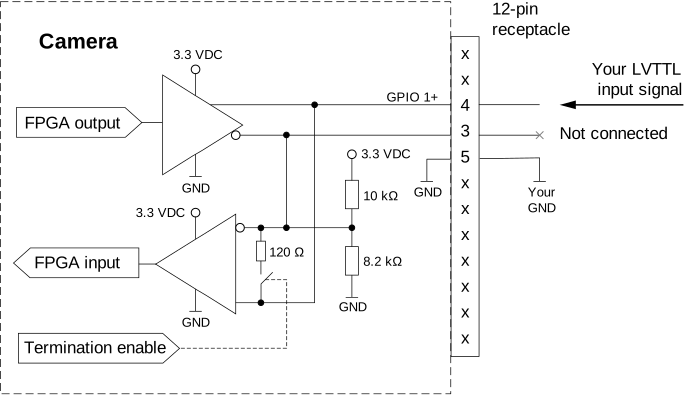
The following diagram shows a typical circuit when receiving an LVTTL (Low Voltage Transistor Transistor Logic) signal. For this purpose, the termination resistor must be disabled and the LVTTL signal must be applied to the positive (+) input pin of the camera. For this configuration, the circuit uses the logic level shown in the tabel below.
Info
In the pylon Viewer, the line format is displayed as RS-422 although the line format used is LVTTL. This is a display issue only. The actual configuration and functionality are not affected.
Electrical Requirements#
The following voltage requirements apply to the camera's I/O input (pin 4 in the example above) when using LVTTL.
| Voltage | Description |
|---|---|
| 0–5.0 VDC | Safe operating range. |
| 0–0.8 VDC | Indicates a logical 0. |
| >0.8–2.0 VDC | Region where the logic level transition occurs. The logical state is not defined in this region. |
| >2.0 VDC | Indicates a logical 1. |
| 6.0 VDC | Absolute maximum voltage. This voltage must never be exceeded. Doing so may damage the camera and voids the warranty. |
Input current: <100 µA
Output Lines#
Using the Output Lines with RS-422#
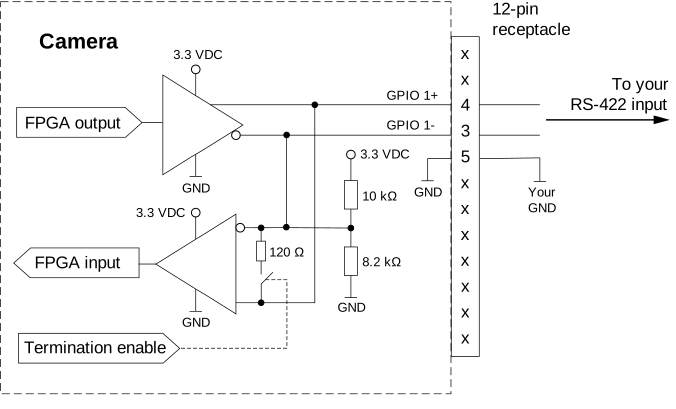
The following diagram shows a typical circuit when each output line is designed to transmit an RS-422 signal. For the camera's I/O circuitry to operate properly, supply a ground as shown below.
Using the Output Lines with LVTTL#
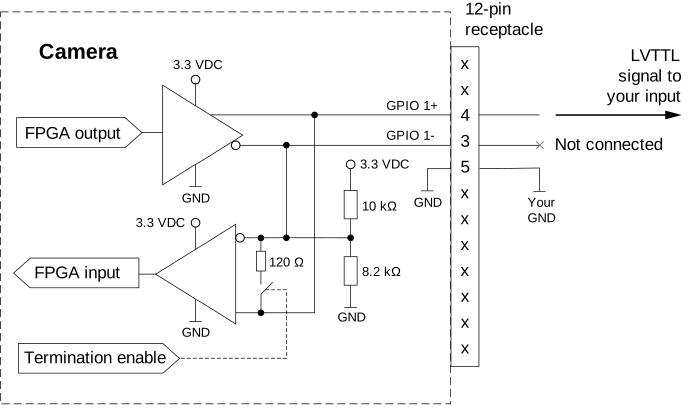
The following diagram shows a typical circuit when transmitting an LVTTL signal. A low signal is indicated by a camera output voltage near zero, a high signal is indicated by an output voltage of approximately 3.3 VDC. These voltages are within the typically specified levels for low voltage TTL devices.
Output current: <150 mA
For the camera's I/O circuitry to operate properly, supply a ground as shown below. The termination resistor must be disabled.